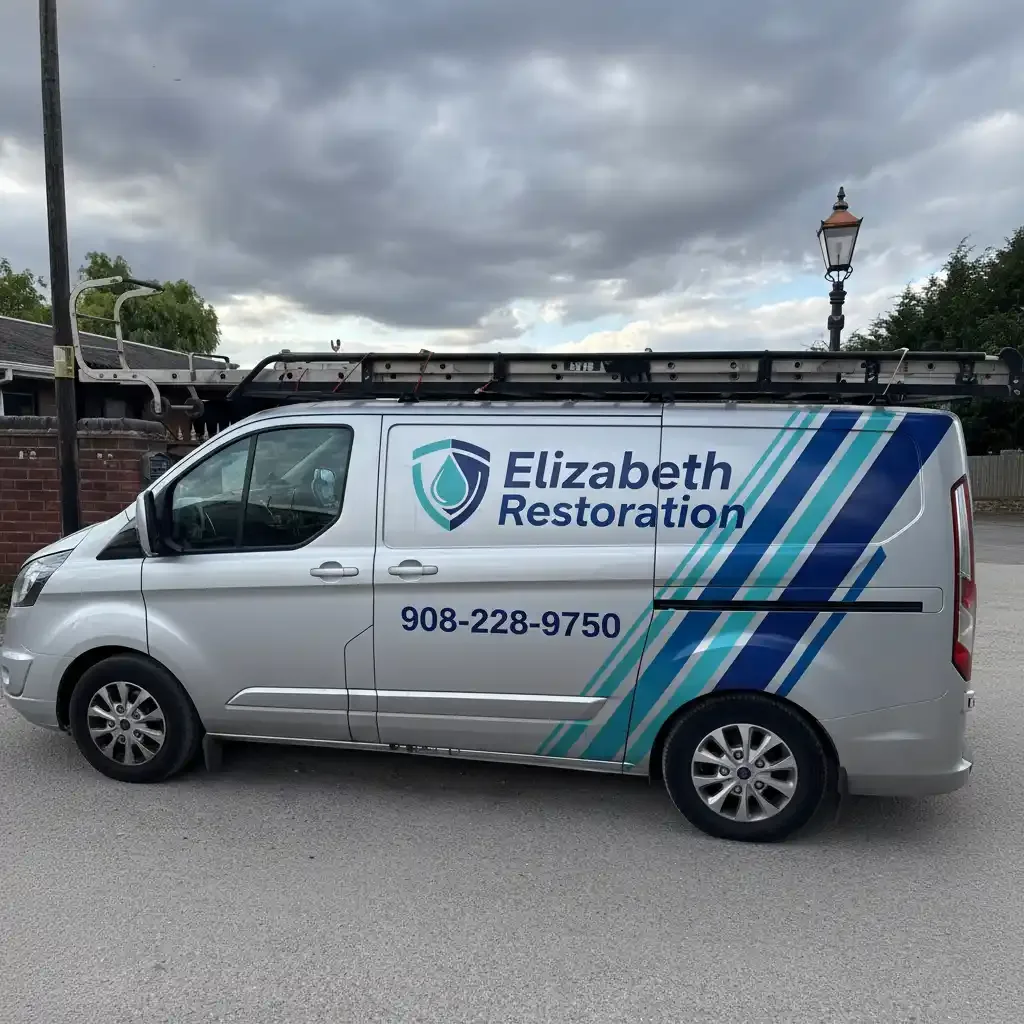
In Elizabeth, the damage from a storm is rarely done when the wind stops — the water it let in keeps working for hours after. Our crew seals the breach to keep the weather out, then traces the moisture path and dries the structure to standard. In Union County, older skylights and roof penetrations are the first points a wind-driven storm forces water through. Each step — tarp, pump-out, dry-down — is recorded with photos and readings so the loss is fully supported. Phone 908-228-9750 for round-the-clock Union County storm recovery.
- Emergency board-up + tarping
- Wind-driven rain water extraction
- Roof + envelope repair
- Tree impact damage
- Insurance documentation
- Full structural rebuild
Securing The Envelope After A Storm
A storm can push water into a property from above and below in the same event. The priority before anything else is preventing additional damage from continued exposure to the elements.
We get a tarp over the opening fast, then turn to the standing water before it migrates further into the structure. Wind-driven rain through a damaged envelope is covered by homeowners as storm damage; rising surface water is flood, which needs NFIP coverage.
The Homeowner Checklist After A Storm
A few right moves in the first hour are worth more than anything that happens later. Get the envelope sealed, record the loss, and report it to the carrier before any permanent repairs begin.
A contractor who appears at your door uninvited after a storm is a reason to slow down, not to sign anything. We dispatch immediately, document the loss to carrier standard, and never ask you to sign over your claim to get help.
Beyond a single service line
A property loss in Elizabeth rarely stays in one lane — storm damage restoration often overlaps with flood cleanup, soot removal, mold inspection and removal, sewage cleanup, rebuild and restoration, and our crew handles all of it under one contract. We dispatch the same standard to Newark storm damage restoration, Storm Damage Restoration in Union, Linden storm damage restoration, Rahway storm damage restoration and everywhere else across Union County.
If you searched for restoration company near Elizabeth, you have reached a local team — call 908-228-9750 any hour. For background, read Storm Damage Documentation in Elizabeth: How to Build an Insurance File That Gets the Claim Paid on our blog, or head back to our Elizabeth home page to see everything we do.